Last Updated on October 29, 2026 by Dental Pathways
Article By Zahir Nathoo, Medical Tourism Facilitator, Canada
Medically reviewed by Dr. Can Atakan, Dentist.
I’m going to tell you something that some dentists would rather you didn’t know.
The idea that you can replace failing or missing teeth with four to six implants per jaw, and walk out with a brand-new set of teeth in a single visit, sounds too good to be true. Yet the dental industry, in Canada and around the world, advertises exactly that under the slogan “teeth in a day.” You’ll also see it sold as same day dental implants, one day dental implants or “same-day All-on-4.” And it’s one of the most complex and expensive dental treatments on the market.
I started Dental Pathways a few years after my sister needed a full-mouth restoration, a procedure so expensive that my dad had to take out a mortgage to pay for it. That experience taught me the difference between marketing and medicine.
The phrase “teeth in a day” isn’t technically false, but it’s often misleading. In this guide, we explain what you actually leave with on day one, how healing really works, what the full treatment timeline looks like when you travel for it, and what the marketing leaves out. That way, you’ll know exactly what to ask before you compare prices and providers.
Keep one question in mind as you read: are these my final teeth, or just the first step?
If cost is the main reason you’re looking at full-mouth implants, start with our guide to dental implants in Turkey and what they cost Canadians.
What Teeth in a Day Really Means (and What You Leave With)
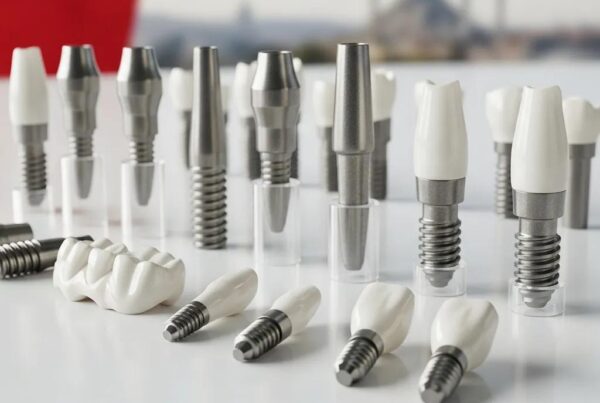
What teeth in a day patients actually receive on day one is almost always a set of temporary teeth, not the final product. The term refers to placing a temporary prosthesis immediately after implant surgery. These temporary teeth are usually made from:
- Acrylic (PMMA): lightweight and inexpensive, but not durable.
- Composite resin: slightly stronger, but still meant for short-term use.
These materials are lighter, and designed to keep pressure off newly placed implants while they heal. They’re not meant for long-term use.
Your permanent teeth, a fixed bridge made from porcelain or zirconia, come later. They’re only placed once your implants have fully fused with the bone. So when you see teeth in a day dental implants advertised, read it as “temporary teeth in a day, final teeth in a few months.”
Temporary teeth aren’t standard for everyone, either. Depending on your bone, your bite and how firmly your implants are anchored at surgery, our dental partners may advise against temporaries altogether. Sometimes the safest implant is one that carries no load at all while it heals.
Temporary Teeth Are for Appearance, Not Eating
This is the part teeth in a day marketing rarely mentions. Temporary teeth are almost never for eating. Their real purpose is aesthetic: to let you smile, speak and get on with life while your implants heal.
A soft-food diet is required throughout the healing period, whether you have temporaries or not. Biting into hard or sticky food can chip or crack an acrylic bridge, and every heavy bite sends force into implants that haven’t bonded to the bone yet. The less pressure placed on your implants during healing, the better they heal.
We explain the truth about teeth in a day in this short video:
Can Dental Implants Be Done in One Day? How Immediate Loading Works
Can dental implants be done in one day? The implant surgery can. The finished result can’t.
Whether temporary teeth are attached to your implants on day one depends on something the ads rarely explain: immediate loading. Immediate loading dental implants are implants that have teeth attached before they’ve fused with the bone.
Immediate loading is a legitimate technique, but only under specific conditions: high implant stability at surgery, a temporary prosthesis light enough to keep the load minimal, and close supervision afterwards. In carefully selected cases, dentists may load temporary teeth straight away. Even then, it’s done cautiously. For patients who travel for treatment, that close supervision is harder: if a temporary cracks or an implant feels loose after you fly home, you can’t simply drop into the clinic the next day. That’s why our dental partners are more cautious with immediate loading for international patients.
Why Torque Value Decides What Happens Next
When an implant is placed, the dentist measures how firmly it’s initially anchored in the bone. This is its torque value, measured in newton centimetres (Ncm). Only implants that reach a high threshold, often around 50 Ncm, are stable enough to carry a light temporary bridge straight away. Even then, that bridge is for appearance, not for chewing.
Torque is the number that shapes the rest of your treatment. It decides whether temporary teeth can be attached straight away and, as we explain below, how long your return trip will be.
Osseointegration: Why Final Teeth Take 3 to 6 Months
Think of implants like anchors set into concrete. If you put weight on them before the concrete cures, you weaken the bond, or risk failure altogether.
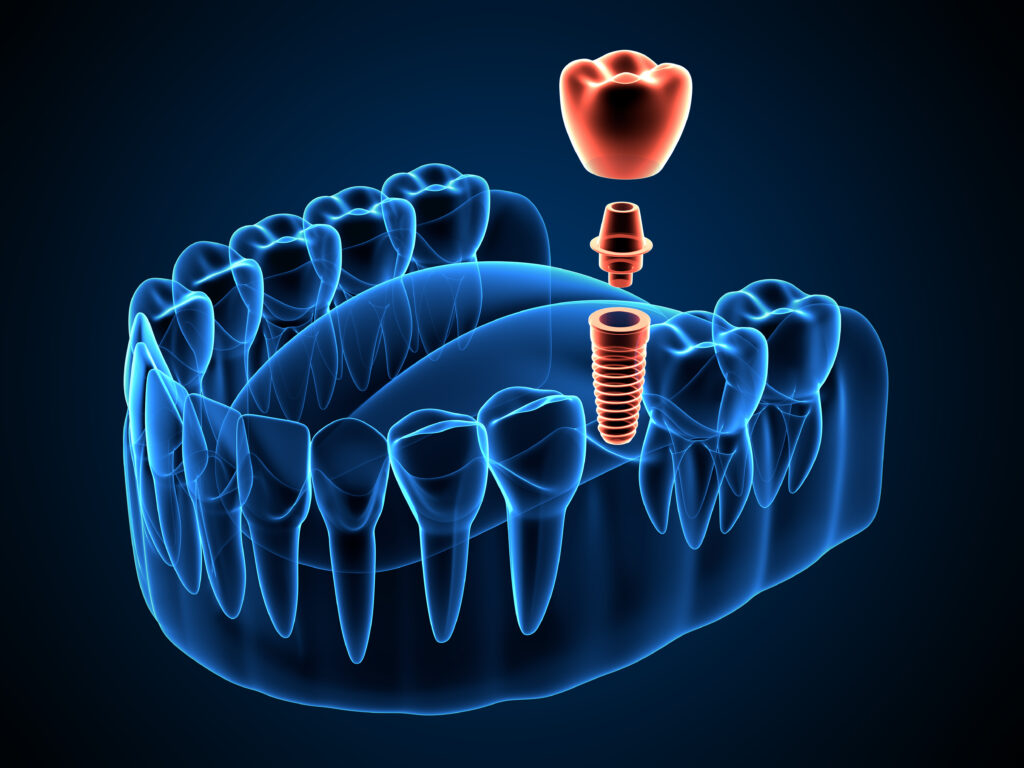
For implants, that curing process is called osseointegration: the bone grows into and around the implant until the two are fused. It takes 3 to 6 months. The dentists we work with find that an implant that hasn’t integrated by 3 months is unlikely to integrate at all. So we plan for patients to return for their final teeth no sooner than 3 months, and no later than 6 months, after surgery, fitted around their travel and work schedules.
This is a clinical requirement, not a scheduling preference. It’s why any clinic suggesting you can leave with a permanent porcelain or zirconia bridge on day one is either misleading you or putting your health at risk. The best dentists tell you what to expect before you start.
The Real Teeth in a Day Timeline: Trips, Healing and Your “Finals”
Here’s what a realistic dental implant timeline looks like for full-arch treatment (All-on-4 or All-on-6) in Turkey. Most patients need two trips. Some need three.
“Teeth in a Day” vs the Real Timeline
What the advert suggests, and what full-arch (All-on-4 or All-on-6) treatment in Istanbul actually takes.
- Trip 1: surgery3D scan, extractions and implants. Temporary teeth only if you’re eligible: for appearance, not chewing.
- Healing at homeYour implants fuse with the bone. Soft foods and a night guard.
- Trip 2: your finalsImpressions, several fittings, then your permanent bridge and night splint.
Bar lengths are indicative. Low torque adds about 4 days to Trip 2; a bone graft that needs its own healing adds a third trip.
Trip 1: Extractions and Implant Surgery (About 5 Days)
Your first visit centres on surgery. On day one, our dental partners in Turkey take a 3D CBCT scan and hold a consultation, which gives them a full clinical picture of your case. Extractions and implant placement usually follow the next day, in a single session. If your jaw needs more bone, it’s often added during the same surgery: a bone graft builds up bone volume where your jaw is thin, and a sinus lift raises the floor of the sinus in the upper back jaw to make room for implants. If you’re eligible for temporary teeth and choose to have them during the healing period, they’re fitted a day or two later. The rest of the time is check-ups and rest. Expect about 5 days, or up to 7 if you have temporaries on both jaws.
Healing at Home (3 to 6 Months)
You fly home and let your implants heal: soft foods, careful cleaning, no smoking, and a night-time mouthguard to protect against clenching (always if you have temporary teeth, and otherwise if your dentist prescribes one). If the surgery has been done well and you follow your surgeon’s aftercare instructions, you’re very unlikely to need further check-ups or to run into complications during the healing period.
Trip 2: Your Finals (Usually 8 to 12 Days)
Patients often refer to this trip as getting their “finals”. It’s when your permanent bridge is made and fitted. It takes more than a day or two because the bridge is built and adjusted in stages: digital impressions first, then several short fitting sessions over the following days, until it fits your bite comfortably. Our dental partners in Istanbul often suggest that patients leave with a custom night-time occlusal splint to protect their new restorations, and we highly recommend it.
How long trip 2 takes depends on your torque value from trip 1:
- The standard approach is to cover the implants under the gum while they heal. On your return, that means a small flap surgery to uncover them, and at least 4 days of healing before impressions can be taken.
- The approach for travelling patients: recognising that international patients have limited time, our dental partners can often leave healing abutments in place after surgery, provided the torque value achieved during the initial surgery is high enough. The implants stay accessible through the gum, so there’s no flap surgery and no extra 4 days on your second trip.
When Bone Grafting and Sinus Lifts Add a Third Trip
Bone grafts and sinus lifts can often be done during the same surgery as the implants, as long as there’s enough of your own bone to hold each implant firmly in place. When there isn’t, for example where the jaw has thinned badly or the sinus sits very low, the graft has to heal first. That usually takes 4 to 6 months, and sometimes longer after a sinus lift, before the implants can be placed. It extends treatment to three trips. It’s one more reason teeth in a day isn’t a reality for everyone: if your bone needs rebuilding first, no honest dentist can promise you teeth on day one.
Why Same Day Dental Implants Are Offered: The Real Benefits
None of this means same day dental implants are uncommon or a bad idea. Having temporary teeth during your healing period has real benefits:
- No “toothless” period: you avoid weeks or months without visible teeth.
- Confidence: you can go about your daily life without gaps.
- Presenting well: many patients need to look and sound like themselves at work and in social situations while they heal.
We take those needs seriously. But temporaries put load on implants that need to heal, so there’s always a trade-off between appearance and risk. To manage it, our dental partners sometimes recommend temporary teeth on one arch only, usually the arch that shows most for you when you speak and smile. The other jaw heals with no load at all.
Temporaries on both jaws are also possible, but if torque values aren’t strong enough, they do increase the risk to your implants. We also always recommend that every patient with temporaries wears a night-time mouthguard, to protect the implants from clenching during sleep. In some cases, a removable temporary bridge can be worn for social situations and taken out at home.
Again, what’s deceptive is marketing temporary same-day teeth as a permanent solution.
The Dangers of One Day Dental Implants
The dangers of one day dental implants come from loading implants too soon, or too hard, before the bone has bonded. Some clinics even claim they can fit a permanent prosthesis immediately, which is medically risky and often financially motivated. The risks include:
- Implant failure: too much force can stop an implant from fusing with the bone, or loosen it entirely, so that it fails soon after surgery.
- Bone loss: overloading implants too soon can damage the bone around them. If an implant then fails, replacing it is harder where bone has been lost.
- Implants shifting: under force or abrasion, a healing implant can move, which leads to a poor fit for your final bridge. Careful aftercare is what prevents this.
- Damaged temporaries: hard or sticky foods can chip or crack an acrylic bridge, and a cracked temporary spreads uneven pressure across several implants at once.
- Bite problems: these often show up months later.
Extra Risks When You Travel for Treatment
When complications happen far from the dentist who placed your implants, aftercare gets harder. A clinic’s warranty may cover a replacement implant, but you still carry the cost and stress of travelling back.
And in Canada, the Canadian Dental Care Plan (CDCP) doesn’t cover dental implants at all. That’s a real problem for anyone who needs implants to eat and function, not just for appearance.
The best dentists follow evidence-based protocols and put safety before sales.
How We Protect Your Implants When You Travel for Treatment
At Dental Pathways, we plan full-arch treatment around one goal: implants that heal properly the first time, for patients who live thousands of kilometres from the clinic.
That starts with a case-by-case evaluation. Every patient’s anatomy, health and circumstances are different, and the dentists we work with look closely at:
- Bone density and quality
- Overall oral health and hygiene habits
- Your ability to return for follow-up, and to manage problems if they arise
From there, our dental partners favour a staged approach for travelling patients: minimal load during healing, temporary teeth on one arch where possible, a night guard against clenching, and a custom occlusal splint once your finals are in. Where torque allows, healing abutments stay in place so your second trip is shorter.
Long-term success depends far more on the surgeon’s technique and your care afterwards than on the implant brand. We explain why in Why Dentist Expertise Matters More Than Dental Implant Brands. After treatment, daily cleaning and regular check-ups protect your implants for years by preventing inflammation of the surrounding gum and bone (peri-implantitis).
Teeth in a Day Cost: The Advertised Price vs the Real Total
Teeth in a day cost is often quoted for the first stage only: the surgery and the temporary teeth. The permanent bridge, made months later, frequently costs extra, and it makes up a large share of the total. When you compare same day dental implants cost between clinics, make sure you’re comparing the full treatment, both trips (if you’re travelling), in writing.
For context, a full arch on four implants (All-on-4) starts from about CAD 25,000 in Canada, and All-on-6 from about CAD 35,000. In Turkey, through Dental Pathways, All-on-4 starts from CAD 4,200 per arch and All-on-6 from CAD 5,380 per arch. That’s up to 86% less on treatment, and about 70% less on average after flights and hotel. Our guide to dental implant costs in Turkey for Canadians has the full price list.
That said, treatment plans can look very different, even between good dentists. In Turkey, the prices advertised on glossy websites that sell dentistry as a commodity are usually not what patients end up paying further down the process. That’s why it’s important to do your research and choose providers who work with integrity and put transparency and good patient outcomes first. Our guide on how to read and compare dental treatment plans shows you what to look for.
Honest Clinics vs Misleading Teeth in a Day Marketing
Not every clinic advertising teeth in a day is misleading you. But clinics that use the slogan often fail to disclose key facts: permanent teeth need months of healing first, fitting a porcelain or zirconia bridge immediately carries medical risk, and the final restoration costs more than the advertised price.
Reputable clinics:
- Explain clearly that teeth in a day means temporary teeth
- Give you a multi-step treatment plan that includes healing time
- Are upfront about the cost of your final teeth and the material choices, including the type of prosthesis you get and how it’s built
Misleading clinics:
- Imply you’ll walk out with permanent teeth in a day
- Offer to fit permanent porcelain or zirconia teeth immediately, despite the risks
- Downplay the healing period and the extra cost of the final restoration
- Don’t properly explain the different prosthesis options available to you
There are no shortcuts in implant dentistry, and marketing that suggests otherwise lacks integrity. The best dentists don’t sell speed. They explain the process.
When you’re ready to choose your permanent teeth, our guide to All-on-X prosthesis options compares zirconia, hybrid and other final prosthesis materials.
Questions to Ask Before You Commit to Teeth in a Day
Whether you’re treated at home or abroad, ask the right questions and expect full transparency:
- What will my teeth be made of on day one, and what will my final teeth be made of?
- How long will my implants heal before the permanent teeth are fitted?
- What will the final restoration cost, and is it included in this price?
- If I’m travelling to Turkey, how many trips will I need, and how long is each one?
- What’s your success rate with immediately loaded implants, and what happens if one fails?
- What’s the plan if I have a problem during the healing period?
And the simplest question of all: are these my final teeth, or just the first step?
The Bottom Line on Teeth in a Day
Same-day temporary teeth on full-arch implants can be a good option when they’re honestly presented and carefully done. Marketing them as a final, permanent solution is misleading. If a clinic insists it can fit a permanent porcelain or zirconia bridge on day one, proceed with caution. The best approach is always an open, transparent process that puts your health and your long-term result first.
Considering All-on-4 or All-on-6? Book a free Discovery Call with Dental Pathways. We’ll walk you through your options, your timeline and your real costs before you commit to anything.
About the Author
Zahir Nathoo is an experienced medical tourism facilitator who has been working with dental patients from Canada, the UK and the US for over two years, connecting them with trusted, affordable and premium dental care in Turkey.
Teeth in a Day: FAQs
Is teeth in a day worth it?
It can be, if you understand what you’re getting: temporary teeth for appearance on day one (provided you are eligible), and permanent teeth after 3 to 6 months of healing. It isn’t worth it if a clinic promises permanent teeth in a single visit.
Can you eat with teeth in a day temporary teeth?
Only soft foods. Temporary teeth are mainly for appearance. Chewing hard or sticky food can damage them and overload implants that are still healing.
How long does the whole teeth in a day process take?
For full-arch treatment in Turkey, usually two trips: about 5 days for surgery, then 8 to 12 days for your finals, 3 to 6 months later. If a sinus lift or bone graft needs its own healing time first, treatment occasionally takes three trips.
How much does teeth in a day cost in Turkey?
Through Dental Pathways, All-on-4 starts from CAD 4,200 per arch and All-on-6 from CAD 5,380 per arch, compared with about CAD 25,000 and CAD 35,000 per arch in Canada. Whoever you compare, ask whether the quote includes your final teeth.
Are same day dental implants safe?
Immediate loading is safe in carefully selected cases, with high implant stability and close follow-up. Risks rise when implants are overloaded or a patient can’t easily return to the clinic, which is why our dental partners use a staged approach for travelling patients.
What is osseointegration, and how long does it take?
Osseointegration is the process of your jawbone growing into and fusing with the implant. It takes 3 to 6 months. Your permanent teeth can only be fitted once it’s complete, which is why full-arch treatment takes two trips.
What is torque value, and why does it matter?
Torque value measures how firmly an implant is anchored in the bone when it’s placed. A high value, often around 50 Ncm, means the implant may be able to carry a light temporary bridge straight away. It also decides whether healing abutments can stay in, which can make your second trip shorter.
Do I have to have temporary teeth after implant surgery?
No. Temporary teeth are optional, and they’re not right for everyone. Depending on your bone, your bite and your torque values, our dental partners may recommend temporaries on one arch only, or none at all, so your implants heal with as little load as possible.
Can I get teeth in a day if I need a bone graft or sinus lift?
Sometimes. Small grafts and many sinus lifts can be done during the same surgery as the implants. If there isn’t enough of your own bone to hold the implants firmly, the graft has to heal for 4 to 6 months or more first, which adds a trip.
You can also visit our Dedicated FAQ Page for answers to some of the most important questions about dental tourism.