
Last Updated on May 15, 2026 by Dental Pathways
All-on-X Prosthesis Showdown: Zirconia, Hybrid & Toronto Designs
When patients travel abroad for All-on-X dental implants in Turkey, they’re often promised a “full zirconia smile” — quick, flawless, and permanent. Yet few realize how many different All-on-X prosthesis options exist, each with unique strengths and considerations.
Zirconia is not a single, universal solution. It’s a material that can be used in several different ways, with varying designs, frameworks, and performance outcomes. Each option comes with its own set of strengths, limitations, and maintenance considerations.
We often meet patients who get their initial dental implants in Turkey (or elsewhere) but feel uncertain about the next phase — the prosthesis, the portion that replaces the teeth and restores full function. This article will help you understand what your All-on-X prosthesis options really are, how they differ, and why the details matter.
The Problem with “Big-Box” Dental Tourism Clinic Approaches
Understanding how these prostheses are built — and the differences between them — is the first step to regaining confidence in your treatment decisions.
1. The Education Gap
Typically, the All-on-4 dental implants cost includes both the implants and the prosthesis. However, many large dental tourism clinics advertise “full zirconia” solutions without explaining what that actually means. In reality, there are multiple prosthesis types — each constructed differently, using different materials, and offering distinct advantages or drawbacks.
Unfortunately, most patients are never exposed to these nuances. Instead, they’re shown glossy before-and-after photos, promised quick results, and left with the impression that all zirconia prostheses are the same. It’s at this point that only the most astute of patients begin to wonder: is dental work in Turkey safe?
The truth is that choosing the right prosthesis design determines not only how your smile looks but also how it feels and how long it lasts.
2. The In-House Lab Illusion
Many clinics market their “in-house lab” as a mark of sophistication and differentiation. In theory, it sounds impressive (a big operation with everything under one roof right?)
Not exactly. In reality, most in-house labs are designed for speed and cost efficiency, not for the precision required to produce advanced restorations. They often rely on junior technicians using mid-range milling machines, producing prostheses that are adequate but not exceptional.
High-end prostheses — especially hybrid zirconia restorations supported by titanium bars — require advanced CAD/CAM milling systems and specialized technicians that only dedicated, external laboratories possess.
That’s why, at Dental Pathways we collaborate with clinics who work with labs that are equipped for complex, customized work — not mass-produced restorations. The video below outlines How to Choose a Dental Clinic in Turkey so you can trust the work that’s being done.
Dental Implants in Turkey: Four Key All-on-X Prosthesis Options
Below we break down the four most common All-on-X prosthesis options, how each is constructed, and when they’re used. Each option described below is widely used when getting dental implants in Turkey and typically included in the All-on-4 dental implants cost. The differences lie not only in materials, but also in how each prosthesis is engineered and assembled.
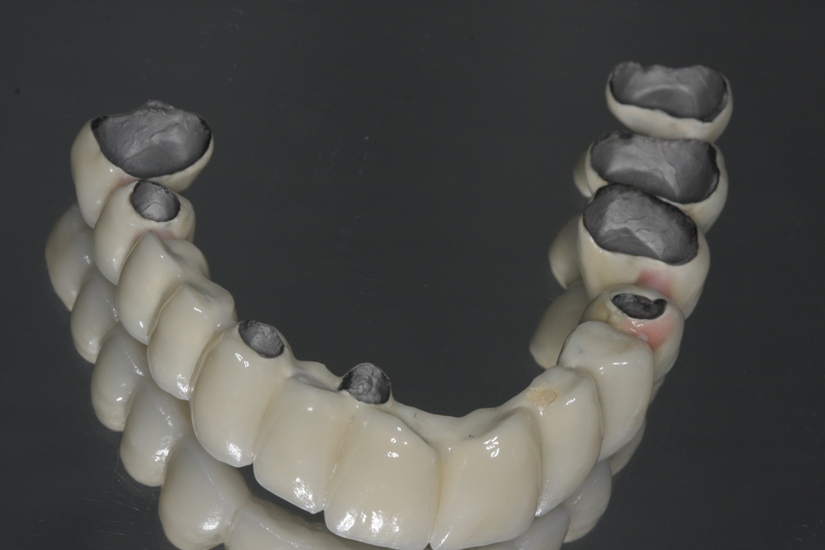
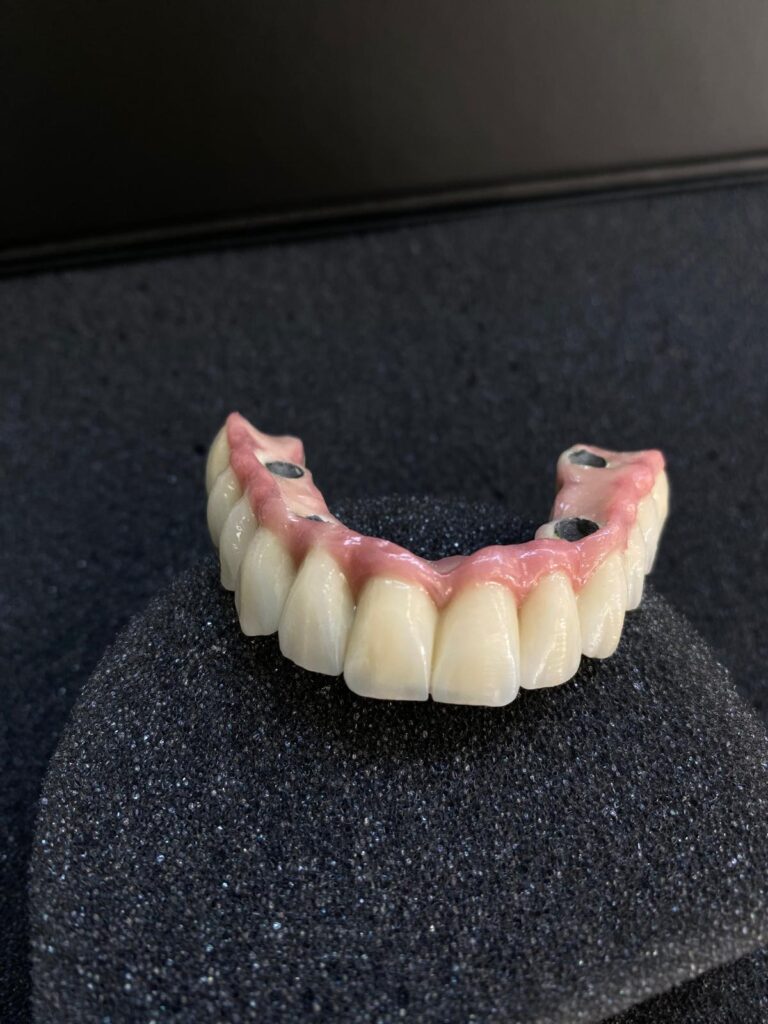
1. Metal-Ceramic Prosthesis (Traditional & Time-Tested Option)
How it’s made:
A metal framework (usually cobalt-chrome or titanium) is fabricated either manually or digitally. Layers of porcelain are then fused directly onto this framework through a high-temperature firing process. The entire structure — teeth and gums — becomes a single, solid unit.
Advantages:
- Strong metal substructure provides excellent support.
- Long-established and time-tested design.
- More affordable than zirconia or hybrid alternatives.
- The thin metal framework allows a comfortable fit and natural gum contour.
Disadvantages:
- Porcelain chipping can occur, especially in patients who grind or clench (Bruxism).
- Repairs are difficult — often requiring remake of the full arch.
- Esthetics are good but lack the translucency of zirconia.
- Heavier than other options.
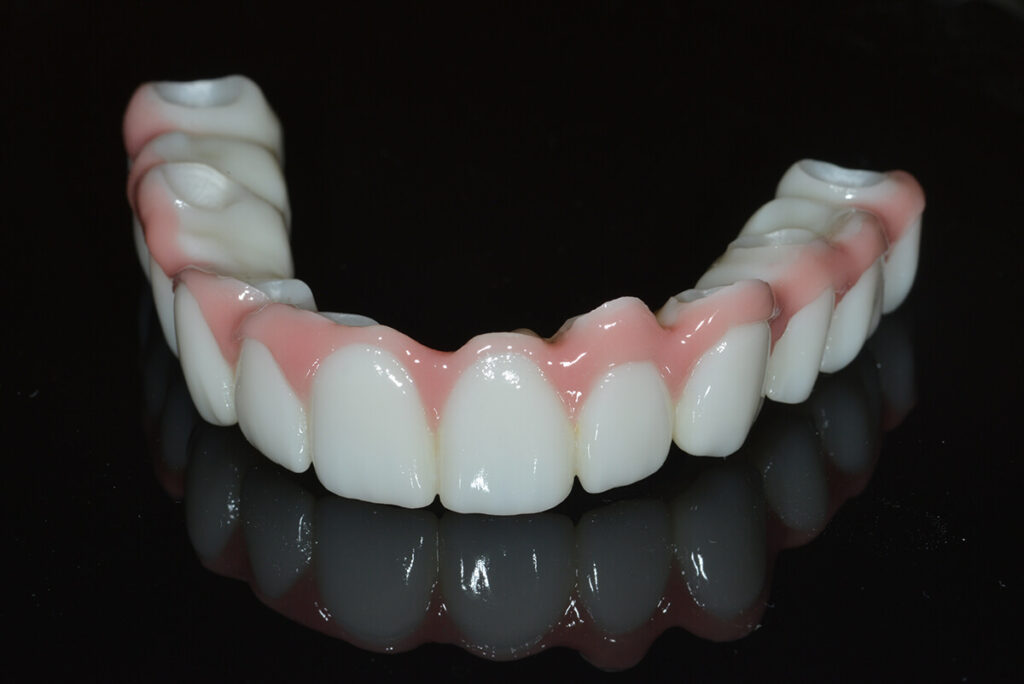
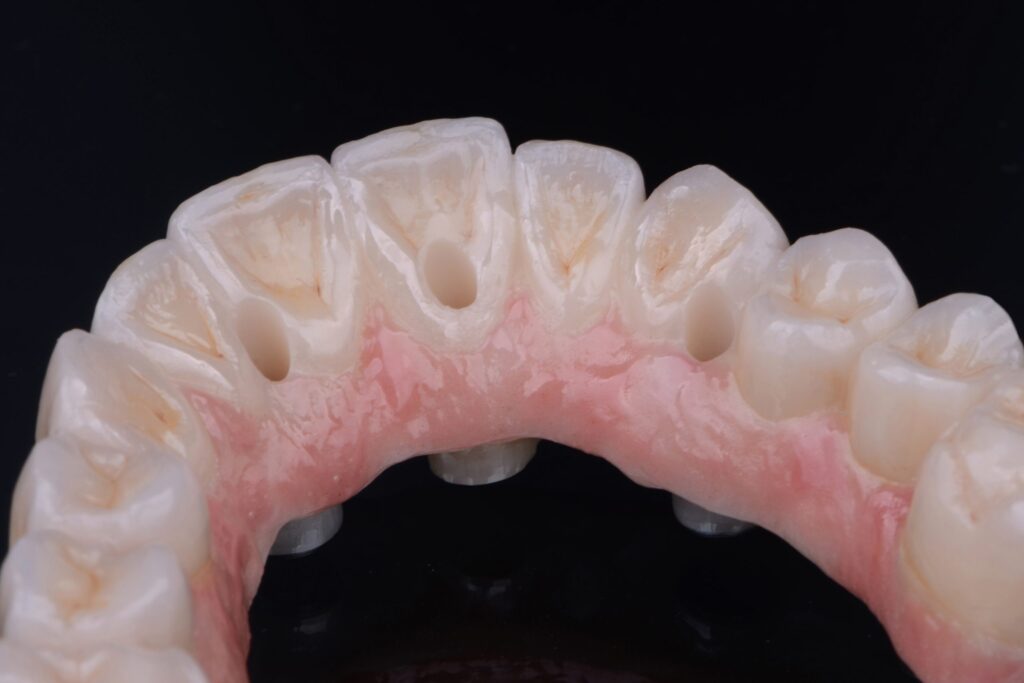
2. Monolithic (Full) Zirconia Prosthesis (Digital & Durable Option)
How it’s made:
Designed fully in a digital workflow, the entire prosthesis — teeth and gum — is milled from a single block of solid zirconia. The surface is stained and glazed to mimic natural tooth coloration.
Advantages:
- Extremely durable and fracture-resistant.
- High precision due to CAD/CAM design.
- No porcelain layering — minimizes chipping risk.
- Very long lifespan when fabricated correctly.
Disadvantages:
- Repairs are not possible without full replacement
- Very rigid — may cause wear on opposing natural teeth.
- Lack of cushioning can contribute to TMJ (jaw joint) discomfort if used on both arches.
- Thicker design may affect gum esthetics.
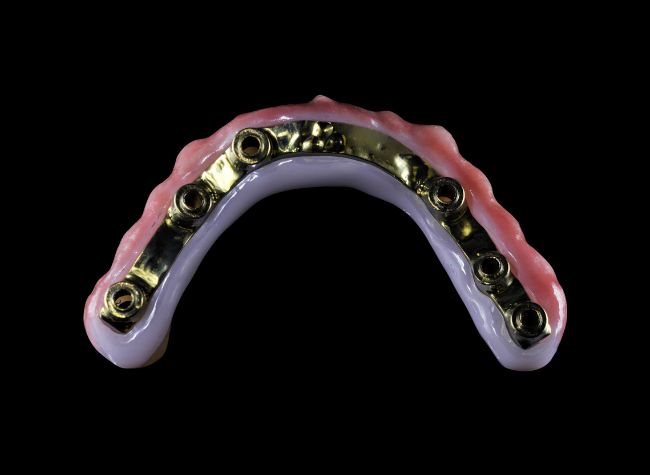
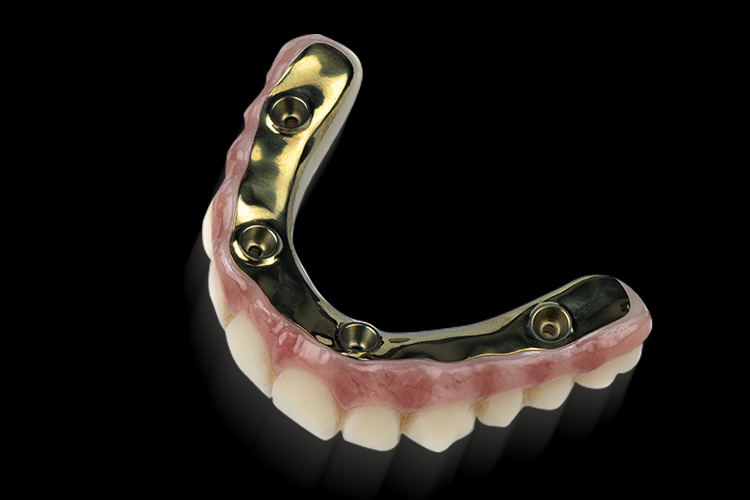
3. Hybrid Zirconia Prosthesis Supported by a Titanium Bar (Advanced Digital Solution)
How it’s made:
A precision-milled titanium bar forms the structural foundation. A separate zirconia arch is milled to fit perfectly over the bar, and the two components are bonded together. This combines titanium’s flexibility with zirconia’s strength and aesthetics. This hybrid structure allows each material to do what it does best — titanium provides flexibility and shock absorption, while zirconia offers rigidity and aesthetics
Advantages:
- Superior strength and stress distribution.
- Lightweight yet durable.
- Reduces screw loosening and fractures.
- Highly esthetic and more comfortable for patients. Ideal for long-term function and stability.
Disadvantages:
- Complex to fabricate — requires specialized external lab.
- Slightly higher cost due to materials and precision involved.
- Not offered by many high-volume clinics due to equipment limitations.
Video Resource: Full Zirconia vs. Titanium-Supported Hybrid Zirconia
In this short educational video, you’ll see a side-by-side comparison of two common full-arch prosthesis designs — a one-piece full zirconia restoration and a hybrid zirconia prosthesis supported by a titanium bar (T-bar). The animation demonstrates how these two structures differ in construction, strength distribution, and esthetic characteristics.
It’s an excellent visual overview of why a titanium-reinforced framework can offer better stress absorption and durability than a monolithic zirconia design in certain cases.
Video Credit & Disclaimer:
This video was produced by a third-party dental provider in the U.S. and is shared here strictly for educational purposes. Dental Pathways is not affiliated with or endorsed by the video’s creator and does not claim ownership of the content. The video is intended to illustrate general prosthetic principles — individual treatment planning should always be based on a professional clinical assessment.
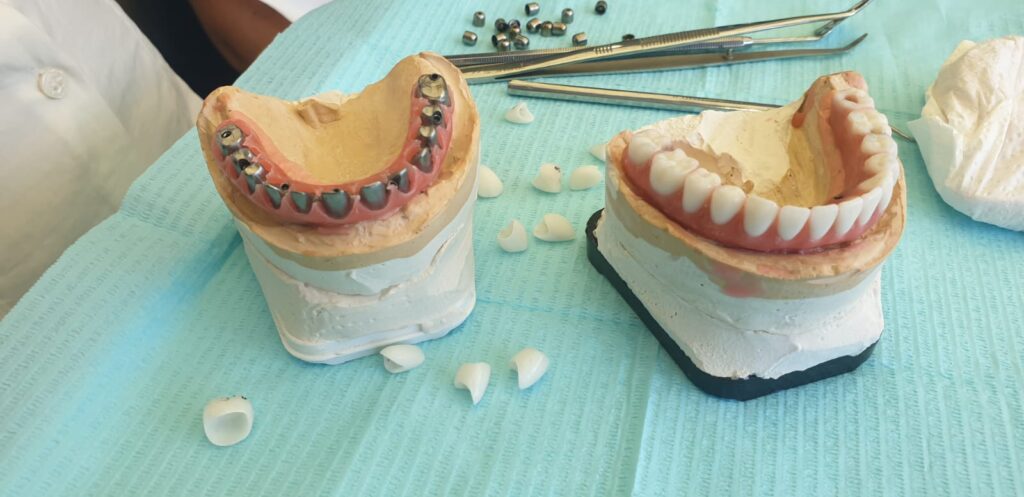
4. Toronto-Style Hybrid Prosthesis (Gold Standard Modular Design)
How it’s made:
A custom titanium bar is milled with extreme accuracy and fixed to the implants. Then, individual zirconia or ceramic crowns are cemented separately onto the bar, often over a pink ceramic base that mimics gum tissue. Because each tooth is fabricated individually, this design requires close coordination between dentist and lab for precision fit.
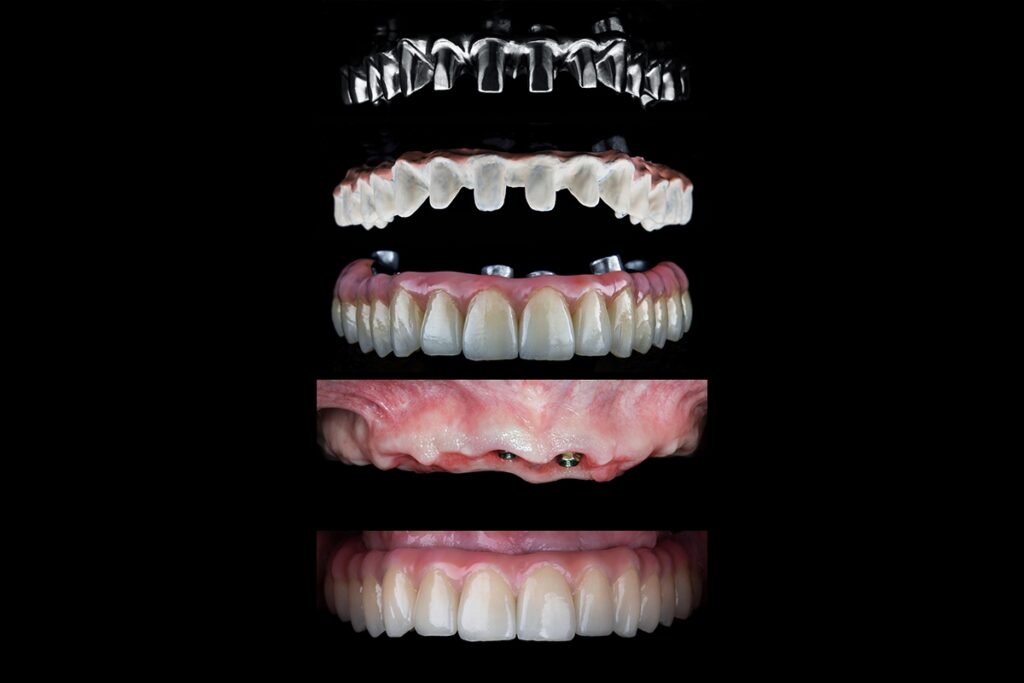
Advantages:
- Each tooth is individually replaceable if damaged.
- Outstanding esthetics and natural translucency.
- Excellent load distribution and bite comfort.
- Longest lifespan among all options when properly maintained.
Disadvantages:
- Most expensive and technically demanding option.
- Longer production timeline due to multiple lab stages.
- Not suitable for all patients — depends on available space, vertical dimension, and bite alignment.
Video Resource: Full Zirconia vs. Toronto-Style Hybrid Prosthesis
This video compares a full zirconia prosthesis with a Toronto-style hybrid design, where individually crafted crowns are mounted on a titanium framework. The demonstration highlights the structural and functional differences between the two — including how the modular, crown-based Toronto design allows for more precise customization, better maintenance, and more natural esthetics.
It’s a helpful reference for understanding why some advanced hybrid systems are considered the “gold standard” for long-term performance, depending on a patient’s bite alignment and vertical dimension.
Video Credit & Disclaimer:
This video was produced by a third-party dental provider in the U.S. and is shared here strictly for educational purposes. Dental Pathways is not affiliated with or endorsed by the video’s creator and does not claim ownership of the content. The video is intended to illustrate general prosthetic principles — individual treatment planning should always be based on a professional clinical assessment.
Comparing All-on-X Prosthesis Options at a Glance
The table below summarizes key features of different All-on-X prosthesis options that are offered with dental implants in Turkey. It will help you to visualize their distinctions across key features — such as framework design, repairability, esthetics, and fabrication complexity.
Of course, it’s important to remember that real-world cases often vary. There are many ways to fabricate each type of prosthesis, and factors like the chosen materials, lab capabilities, and the patient’s individual anatomy can influence both the process and outcome.
Still, this comparison offers a clear snapshot of the core structural and functional differences that help patients understand why no two prosthetic designs — or treatment plans — are ever exactly alike.
| Feature | Metal-Ceramic | Monolithic Zirconia | Zirconia + Titanium Bar | Toronto-Style Hybrid |
| Framework | Cobalt-Chrome / Titanium | Zirconia (one-piece) | Titanium Bar + Zirconia | Titanium Bar |
| Superstructure | Porcelain fused to metal | Solid zirconia | Zirconia bonded to titanium | Individual crowns on bar |
| Repairability | Difficult | Not repairable | Limited (bar reusable) | Excellent (individual crowns replaceable) |
| Esthetics | Moderate | High | Very High | Exceptional |
| Weight | Heavier | Lighter | Very Light | Very Light |
| Fabrication Complexity | Low–Moderate | Moderate | High | Very High |
| Cost | Lower | Mid-Range | Upper-Mid | Premium |
Choosing the Right All-on-X Prosthesis: It’s Not One-Size-Fits-All
It’s important to note that there isn’t a single “best” prosthesis for everyone. Each patient’s case is unique — factors such as vertical dimension, bite alignment, bone structure, and even facial esthetics play a critical role in determining which design will deliver the best long-term result.
For some patients, a metal-ceramic design may offer the ideal balance of strength and fit. For others, a hybrid zirconia prosthesis or Toronto-style design may provide better load distribution or esthetic precision.
The goal isn’t to find the most expensive solution, but rather the most suitable one — one that harmonizes with your anatomy, function, and expectations. That’s why careful evaluation by an experienced dentist and a qualified lab team is essential before selecting your final prosthesis.
Why Material Quality and Customization Matter
Even the best design can fail if the wrong materials or poor fabrication methods are used. The strength, precision, and esthetics of your prosthesis depend heavily on both the materials and the laboratory behind it.
Cheaper materials may discolor, fracture more easily, or fit poorly — leading to costly repairs or discomfort. High-grade materials such as Nacera® zirconia and GC ceramics provide proven strength, translucency, and long-term stability. Equally important is lab flexibility — a skilled dentist should have the freedom to work with a trusted laboratory capable of producing the full range of prosthesis types. This ensures your restoration is tailored to your anatomy and not limited by a clinic’s internal constraints or cost-cutting policies.
At Dental Pathways, we only work with established clinics and laboratories that prioritize precision, customization, and patient safety — not volume. When it comes to picking materials for dental crowns or full mouth restorations, we talk about the importance of quality and ethical dentistry in an article that explores The Hidden Costs of Choosing Convenience Over Craftsmanship.
Expertise and Integrity Make the Difference
Dental tourism doesn’t have to mean compromise. When evaluating the cost of all-on-4 dental implants, the highest price isn’t always the best option. The key, rather, is choosing a team that values transparency, experience, and long-term results over short-term profit. That includes choosing the right prosthesis for your unique case.
So if you’re still asking “is dental work in Turkey safe,” at Dental Pathways, our goal is to help patients make confident, informed decisions about their All-on-X prosthesis options and long-term oral health. We collaborate exclusively with clinics that use high-quality materials, advanced lab partners, and ethical treatment protocols — so you can focus on what matters most.
If you’ve already had implants placed and are unsure about your next step, or if you’re comparing treatment plans and want a second opinion, we’re here to help. We’ll review your case, discuss your prosthesis options, and connect you with trusted dental specialists in Turkey who share our commitment to patient-first care.
The promise of a “full zirconia smile” may sound simple — but achieving lasting results takes expertise, collaboration, and integrity at every stage of the journey.






Very nice article,exactly what I was looking for.
That’s good to hear! Let us know if you need any support on dental treatments in Turkey. Cheers.